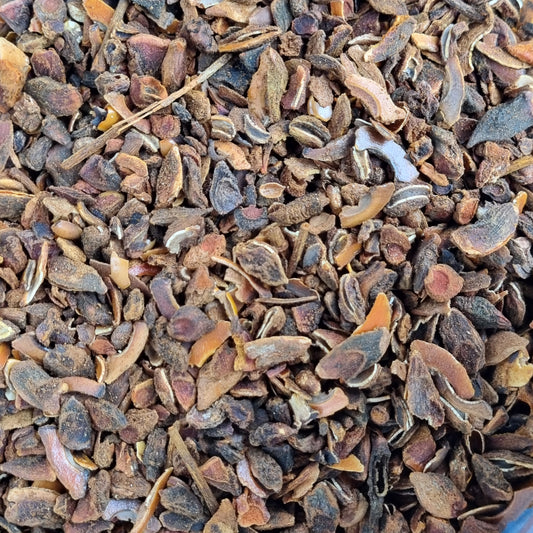
Collection: Star Anise
Botanically, star anise is the fruit of the Illicium verum tree, native to southern China and northeast Vietnam. The fruit, which resembles a star with eight points, each containing a seed, is harvested while still green and then dried until it becomes hard and woody. It is a key ingredient in various culinary dishes and has a strong, liquorice-like flavour that is more pungent than aniseed.
Magical Properties
Star anise is a powerful herb in magical practices, often used for protection, luck, and enhancing psychic abilities. Its star shape is symbolic of the five elements—earth, air, fire, water, and spirit—making it a potent tool in rituals. Placing star anise in the corners of your home or carrying it with you is believed to ward off negative energy and attract good fortune. Additionally, it’s commonly used in love spells and divination to enhance intuition and connect with higher realms.
Medicinal Properties
Star anise is celebrated for its medicinal qualities, particularly as a digestive aid and antiviral agent. Rich in shikimic acid, it’s a key ingredient in the production of Tamiflu, an antiviral medication used to treat influenza. The herb also boasts carminative properties, making it effective in alleviating gas, bloating, and other digestive issues. Additionally, star anise is used in traditional remedies for respiratory health, providing relief from coughs and colds, and its phytoestrogen content is believed to help in balancing hormones.
Historical Properties
The historical use of star anise dates back over 3,000 years in Chinese medicine, where it was valued for its flavour and healing properties. The spice was introduced to Europe in the 16th century by Sir Thomas Cavendish, where it quickly became popular in both culinary and medicinal applications. Throughout history, star anise has been prized not only for its distinctive taste but also for its therapeutic benefits, cementing its place in the spice trade and traditional medicine across cultures.
| Property |
Description |
| Botanical Name |
Illicium verum |
| AKA |
Chinese Star Anise |
| Origin |
Southern China, Northeast Vietnam |
| Chakra |
Third Eye (Ajna) |
| Plant part used |
Fruit (star-shaped pods) |
| Zodiac |
Sagittarius |
| Element |
Air |
| Warnings |
Avoid consuming large amounts, as it may cause toxicity in high doses. Be cautious not to confuse with toxic Japanese Star Anise (Illicium anisatum). |
| Substitutions |
Anise Seed, Fennel, Licorice Root |