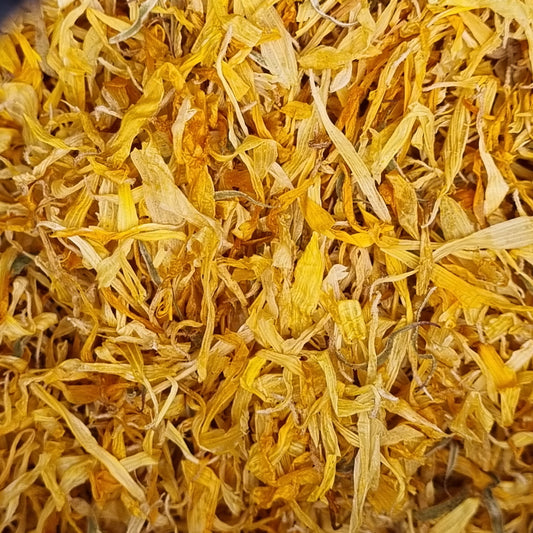
Calendula petals can be used in your magical teas, bath soaks, incense blends and spells.
Calendula is a plant that has been used for centuries as an ornamental, as well as culinary, cosmetic and medicinal purposes. Calendula can be taken orally or applied topically. A powerful antioxidant, it is amongst the strongest of antiviral herbs. An anti-inflammatory, it calms muscle spasms, treats constipation, helps heals wounds, is antimicrobial, antiviral and improves oral health. Also makes a great natural yellow dye.
Magical Properties
Calendula petals are cherished for their protective and healing qualities. They are often used in rituals to ward off negative energy and bring warmth to sacred spaces. The petals are also associated with enhancing dreams, promoting vivid and insightful visions during sleep. They can be placed under pillows or added to dream sachets to encourage restful and prophetic dreams. Their bright, sun-like energy invokes positivity and comfort, making them ideal for rituals of renewal and personal empowerment.
Medicinal Properties
Traditionally, calendula has been used for its healing benefits, especially for skin ailments. Its natural anti-inflammatory and antimicrobial properties make it a go-to remedy for wounds, burns, and minor skin irritations. Calendula-infused oils and balms are commonly applied to soothe rashes, eczema, and other skin conditions. It’s also known for supporting digestion and reducing inflammation internally when taken as a tea, aiding in soothing ulcers and promoting overall gut health.
Historical Properties
Calendula has a rich history, dating back to ancient civilizations such as the Greeks and Romans, who used it for both ceremonial and medicinal purposes. In the Middle Ages, calendula was highly regarded for its ability to heal wounds, and it was often grown in monastery gardens for its practical use in salves and tinctures. Calendula also held symbolic significance, as it was believed to bring protection and good fortune when hung in doorways or scattered around the home.
Botanical Properties
A member of the daisy family, Calendula officinalis is a bright and hardy flower known for its golden-yellow or orange petals. It thrives in temperate climates and is often grown in gardens for its beauty and ease of cultivation. The petals are edible and are commonly used in culinary practices, lending a subtle flavour to soups and salads. Calendula is also a companion plant, benefiting nearby crops by repelling pests and enhancing soil health.
| Property |
Description |
| Botanical Name |
Calendula officinalis |
| AKA |
Marigold, Pot Marigold, Garden Marigold |
| Origin |
Southern Europe, Mediterranean, but cultivated worldwide |
| Chakra |
Solar Plexus, Heart |
| Plant part used |
Petals |
| Zodiac |
Leo, Virgo |
| Element |
Fire |
| Warnings |
May cause allergic reactions in those sensitive to Asteraceae family (daisies); not recommended for use during pregnancy without professional guidance |